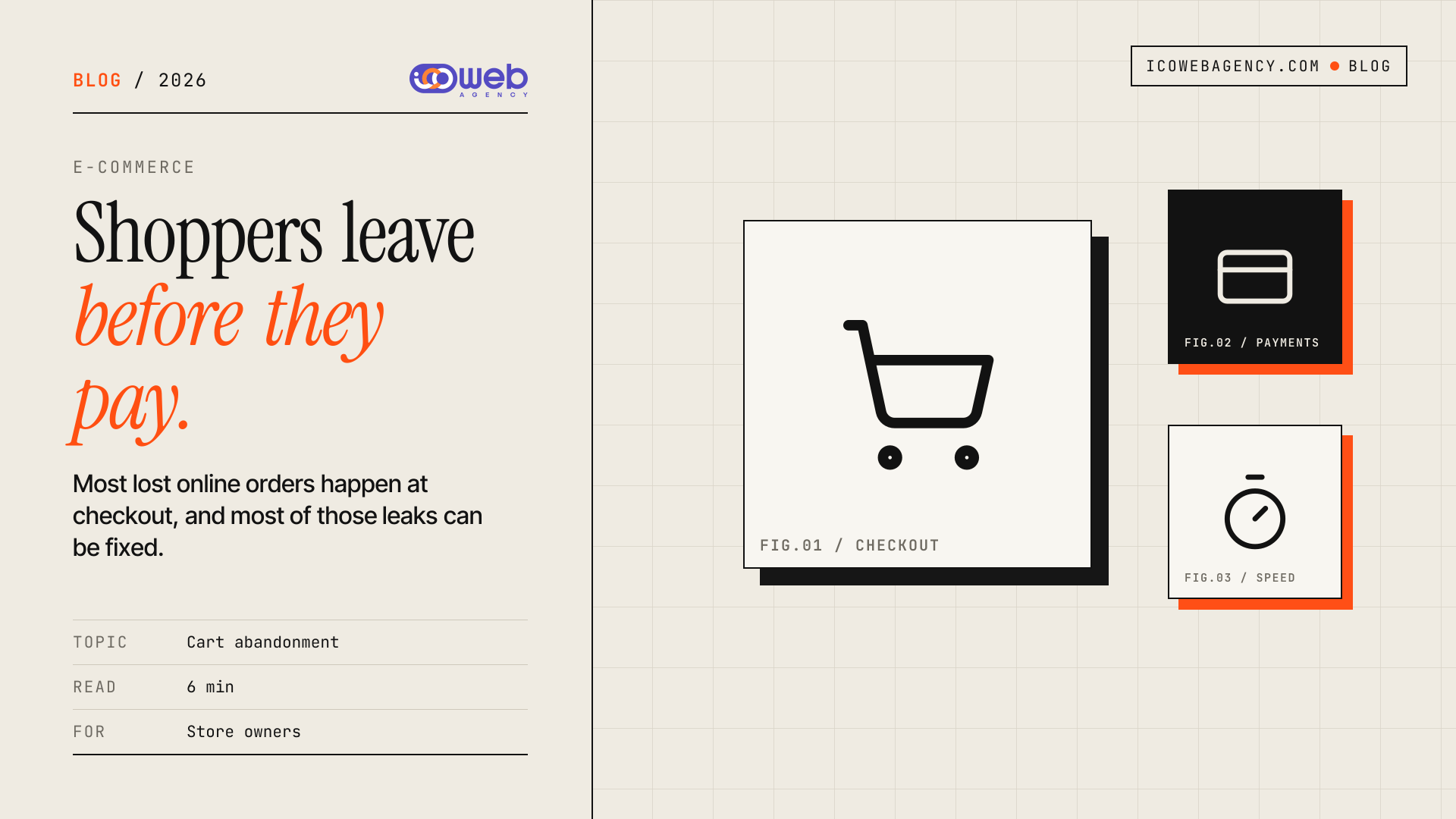
Cart abandonment is when a shopper adds products to their basket and then leaves without completing the purchase. For most online stores it is the single largest gap between interest and revenue. The good news is that most of the causes sit inside your checkout, not in your advertising, so they can be fixed. This article explains the common reasons shoppers leave, the changes that usually recover sales, and how to measure what is happening before you spend money on a rebuild.
What cart abandonment means for your store
A shopper who adds a product to the cart has already decided they want it. Abandonment happens after that point, which makes it a costly leak. Baymard Institute, which publishes long-running research on online checkout, has reported average cart abandonment rates close to 70 percent across many online stores for years. Your own rate will differ by product, traffic source and device, but the pattern is consistent: most people who reach checkout do not finish.
The useful question for a business owner is not "why do people leave?" in general. It is "at which step do they leave, and what is stopping them there?" Answering that turns a vague problem into a short list of fixes.
The reasons shoppers leave at checkout
Unexpected costs appear late
Delivery fees, service charges or taxes that show up only on the final page are one of the most common reasons people abandon a basket. A shopper who was willing to pay the product price often feels misled when the total jumps. Show delivery costs on the product or cart page, and let people see the full total before they enter any details.
They are forced to create an account
Many shoppers want to buy once and move on. If the store insists on a password before checkout, a share of them will leave. Offer guest checkout and invite account creation after the payment is complete.
The page is slow or breaks on mobile
Most traffic to Nigerian online stores arrives on phones, often on mobile data where every extra second of loading costs patience. A checkout that is slow to respond, has tiny buttons or fails to show properly on a small screen loses people who would otherwise pay. Test the full purchase on a mid-range Android phone and a slow connection, not only on your office computer.
Preferred payment options are missing
Some customers want to pay by bank transfer, pay on delivery, use a card, or pay through a mobile wallet. If only one option is offered, a shopper whose method is missing has to stop and find another store. Offer the methods your customers already use, and make sure each one is clearly labelled.
Trust is not visible
Shoppers ask themselves whether they will be charged twice, whether the store is real and what happens if the goods do not arrive. Clear return terms, visible contact details, a secure padlock on the payment page and a simple order confirmation all reduce that doubt. Trust signals are cheap to add and rarely cost a sale.
How to reduce cart abandonment without a full redesign
Most stores can recover a meaningful share of lost orders by working through a short list of checkout improvements in order of impact:
- Show the full price early. Display delivery and fees on the product and cart pages.
- Remove required sign-up. Allow guest checkout by default.
- Cut the number of steps. Put the address, delivery and payment on as few screens as possible, with a progress indicator.
- Offer the payment methods your buyers use. Cards, bank transfer, pay on delivery and wallets where relevant.
- Make errors easy to fix. Explain a declined card in plain words and keep the cart intact when a payment fails.
- Speed up the pages. Compress images, remove unused scripts and test the checkout on slow connections.
- Send a reminder. A single, polite message to people who left a cart with an email address often recovers some orders.
Change one thing at a time, then measure. If you change five things at once, you will not know which one worked.
Measure the checkout before you change it
Your analytics tool can show you the path shoppers take from product page to cart, from cart to checkout, and from checkout to payment confirmation. The step with the biggest drop is where to start. If many people reach the cart but few start checkout, the problem is usually cost or trust. If many start checkout but few finish, look at forms, payment options and errors. This simple funnel view often reveals that the fix is smaller than the owner expected.
When a custom store makes the difference
Off-the-shelf store templates handle the basics, but they limit how far you can change the checkout. If you need delivery rules specific to your city, a payment flow that matches how your customers actually pay, or stock and order records that connect to your team's daily work, a custom build gives you control over each step. Our website and e-commerce services cover checkout design, speed and payment integration, and our portfolio shows online stores and booking systems we have shipped for real businesses.
Frequently asked questions
What is a good cart abandonment rate?
There is no single target that suits every store, because the rate depends on product type, price, traffic source and device mix. Track your own rate over time and compare each change against your own baseline. The aim is steady improvement, not matching a published average.
Does a faster website really reduce abandonment?
Yes, especially on mobile. Slow pages make shoppers wonder whether the order will go through, and they leave before finishing. Speed work on the cart and checkout pages usually matters more than speed on the homepage.
Should I offer pay on delivery?
If your customers expect it, offering pay on delivery can remove a major objection. It does add risk for failed deliveries and cash handling, so set clear rules and track the cost of returned orders before you rely on it.
Can I fix abandonment without a developer?
Some fixes, such as showing delivery costs earlier, adding trust messages or writing clearer error text, are often within reach of a store owner or a platform's settings. Changes to checkout flow, payment integration and speed usually need a developer who can test them properly.
If your online store loses shoppers at checkout and you want to find out where and why, tell us about your store and what you sell and we will review the checkout with you. Our team at Icoweb can map the problem, suggest the fixes that matter most and build them in a way you can manage yourself.