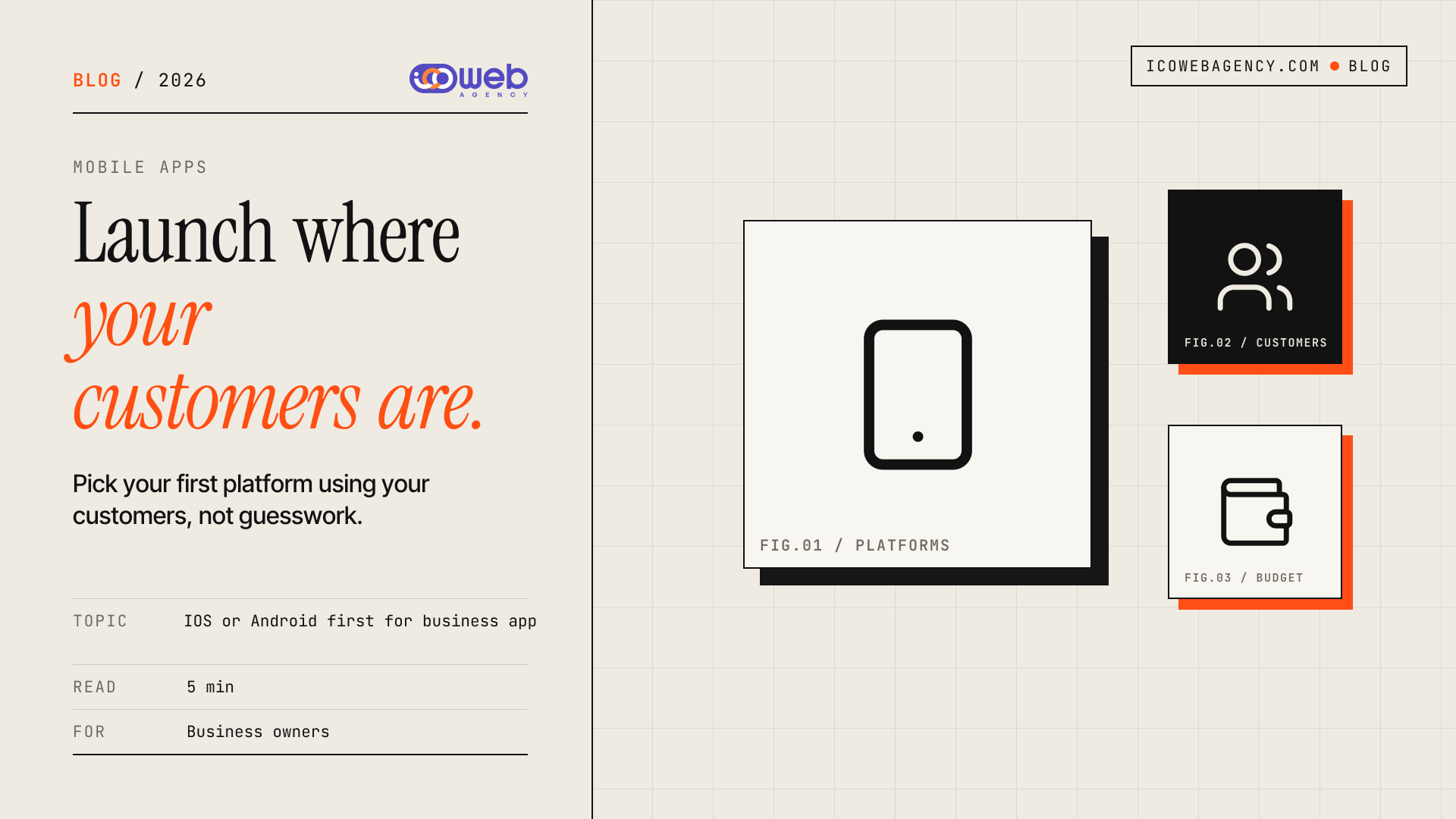
Deciding iOS or Android first for your business app is one of the first calls you will make, and it shapes your budget, your launch date and who you reach in the first months. The right choice depends on where your customers already are, what the app needs to do and how quickly you need it live. This guide explains how to make that call before you commit to a build.
Start with the phones your customers use
Your first decision should rest on evidence about your users, not on personal preference. If your customers buy on the go, find out which phones they already carry. Ask a handful of existing customers, check the device breakdown in your website analytics, or look at the phones your sales staff and suppliers use.
Why Android often gets the first release in Nigeria
Android is the most common smartphone platform in Nigeria, and many buyers use mid-range devices with limited storage and older system versions. For a consumer app that needs to reach a wide audience, an Android-first release is a practical starting point. Plan for varied screen sizes and memory limits from the first day of design and testing.
When iOS should go first
iPhone users are often more willing to pay for apps, and iPhones are more common in some segments, such as higher-income customers, certain professional groups and audiences in the United Kingdom or the United States. If your buyers sit mainly in those groups, or your business sells to executives who carry iPhones, starting on iOS can make sense.
Build for both platforms from one codebase
You do not always have to choose. Cross-platform frameworks let one team write most of the app once and publish it to both stores. Icoweb builds mobile apps with Flutter and React Native, and Flutter lets one codebase target iOS and Android while keeping the interface consistent. You can read more in our mobile app development service.
Shared code lowers the cost of the second platform, but it does not remove the work. You still need:
- Testing on real iOS and Android devices, including older models
- Store accounts and review submissions for each platform, with Apple's annual developer fee and Google Play's one-time registration fee
- Platform-specific handling for notifications, payments, permissions and background tasks
- Separate release steps and updates on each store
Questions to answer before you pick a platform
- Where are most of my paying customers, and which phones do they use?
- Does the app need hardware features such as camera scanning, Bluetooth or background location?
- Do staff or partners need the app, and what devices do they have?
- How soon do I need to launch, and can the second platform wait?
- Will people use the app offline or on weak connections?
The offline question matters most. If your app must work at a site with poor signal, the way data is stored and synced will shape the build more than the platform choice does. Our technical support team can also help when an existing app needs fixing before a new platform is added.
Plan the second platform before you launch the first
Launching on one platform is a sound move, but design the app so the second version is not a rebuild. Keep business logic in a shared backend, use one set of data models, and document screens and user flows. Decide early whether the second release follows a few weeks later or is part of the same plan, so customers on the other platform know what to expect.
After launch, track which platform brings the most sign-ups, orders and repeat use. The split you see in real use can change your priorities for the next release.
Frequently asked questions
Can I launch on Android and iOS at the same time?
Yes, if you use a cross-platform framework such as Flutter and plan for testing and store submission on both. It usually costs more than a single platform, but less than two separate native builds. The timeline depends on the features and how many devices you need to test.
Is Android cheaper to build for than iOS?
Not in general. Build effort depends on features, integrations and design more than on the platform. The main practical differences are the wider range of Android devices to test on and the review rules that apply to the iOS store.
Which platform should a B2B app start with?
Start with the platform your actual users rely on at work. Ask staff and partners which devices they carry, and check whether the company issues standard phones. If the answer is still unclear, a short pilot with a small group on both platforms will tell you more than guessing.
Do I need the app in both stores if customers already use my website?
Not always. A well-built mobile website can cover light use, while an app earns its place for repeat tasks, notifications and features that need the phone itself. Decide based on what customers will actually do in the app.
If you have an app idea and want a straight answer on platform and scope, send us a brief through our project form or contact us. We will talk through the options with you before you commit to a build.