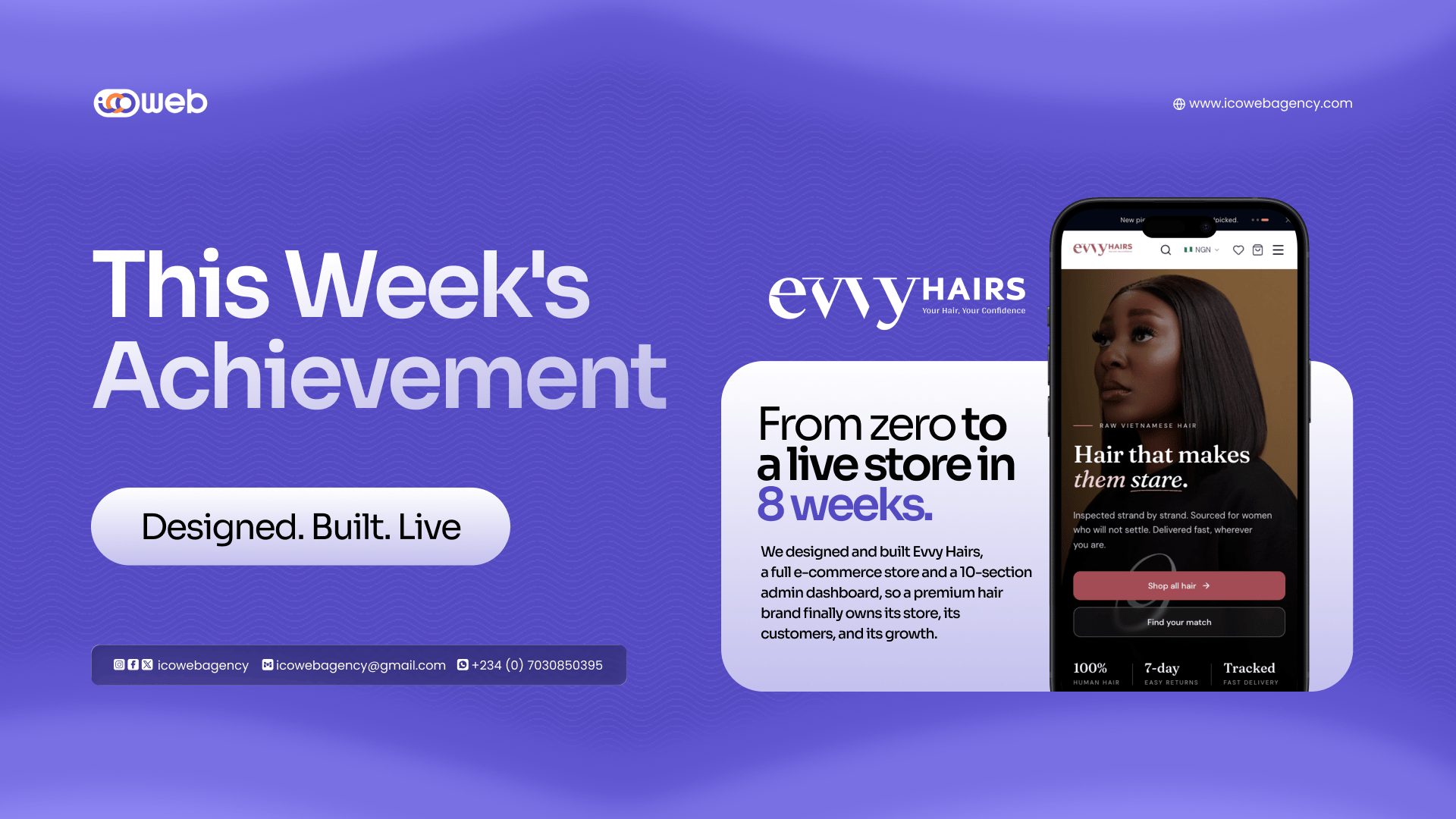
Selling on someone else's marketplace means building someone else's business. Every order strengthens the platform, while the brand may never see its own customers. For Evvy Hairs, a premium hair brand, that gap was the core problem. This case study shows how custom online store development gave the brand its own store, its own customer data and a dashboard to run the business.
Why marketplace selling was holding the brand back
The marketplaces took a cut of every order and kept the brand invisible to its own customers. Evvy Hairs had no customer list to build loyalty on, no inventory tracking and no clear way to grow repeat business. Running orders meant juggling messages and spreadsheets. The brand was doing the selling, but the platform owned the relationship.
The brand wanted its own store, its own customer data and a way to run everything without depending on a developer for every change. We built two full products from the ground up: a storefront and an admin dashboard.
A custom online store built around how hair is bought
A storefront that feels premium
The store at evvyhairs.com gives shoppers detailed product pages with the information that matters when buying hair: type, texture, length, origin and color, plus a full gallery and video support. Products can carry variants, each with its own price and stock, so inventory is tracked at the level that actually sells. Cart and wishlist follow the shopper across devices, so a basket started on a phone is still there on a laptop.
Pricing, payments and shipping across borders
Customers are not all in one country, so the store shows prices in Naira and lets shoppers view them in US dollars or British pounds using live exchange rates. Payment runs through Paystack. Shipping works across Nigeria, the UK and the US, with rates the team controls and a free shipping threshold they can set.
Follow-up runs automatically. Order confirmations, welcome emails, abandoned cart reminders and restock alerts all go out without manual work.
A checkout that protects every payment
The part we engineered hardest is the part customers never see: the money path. Checkout is built so that no matter how a payment confirms, a customer is never double charged and an order is never processed twice. In e-commerce, that is the thing that must never break, and it was built not to.
An admin dashboard that runs the whole business
The second product is the admin dashboard, and this is where the brand took control. From one place, the team manages the full catalog with variants and product images, processes orders with status tracking and automatic shipping notifications, and watches payments and revenue at a glance.
Affiliates, reviews and customer records
The dashboard goes well beyond basic store admin. It includes:
- A full affiliate program with referral tracking, commission rates and payout management, so happy customers can become a sales force
- Store credit for rewarding referrals
- Multi-country shipping rates with exchange rate control
- Category management and review moderation
- Customer profiles with full order history
- A messaging inbox with replies
There are more than ten sections in total. Every one is searchable, filterable and usable on a phone. The team runs the entire business itself, with no developer in the loop.
The result: a brand that owns its platform
Evvy Hairs moved from renting space on a marketplace to owning a complete platform: its store, its customer relationships, its data and its growth. Brand, payments, shipping, affiliates and content now sit under one roof, under the brand's control. You can see more of our shipped work in the portfolio.
Frequently asked questions
What is custom online store development?
It is building an online store designed around a specific brand's products, customers and way of selling, rather than renting space on a shared marketplace. The brand owns the storefront, the customer data and the tools that run the business. The result is a store shaped to how the brand actually sells.
Why did Evvy Hairs move away from marketplaces?
The marketplaces took a cut of every order and kept the brand invisible to its customers. The brand had no customer list, no inventory tracking and no clear path to repeat business. A custom store gave it its own customer data and a direct relationship with shoppers.
How does the store handle customers in different countries?
Shoppers can view prices in Naira, US dollars or British pounds using live exchange rates, and payment runs through Paystack. Shipping covers Nigeria, the UK and the US, with rates the team controls and a free shipping threshold they can set.
Can the brand manage the store without a developer?
Yes. The admin dashboard lets the team manage products, orders, shipping, affiliates, reviews and customers themselves, so they do not depend on a developer for every change.
If your business is paying commissions and handing customers to a marketplace, you do not have to stay there. Icoweb Agency builds custom online stores and the dashboards that run them, and our full range is on our services page. Start a project brief and we will talk through your products, your customers and how you want to grow.