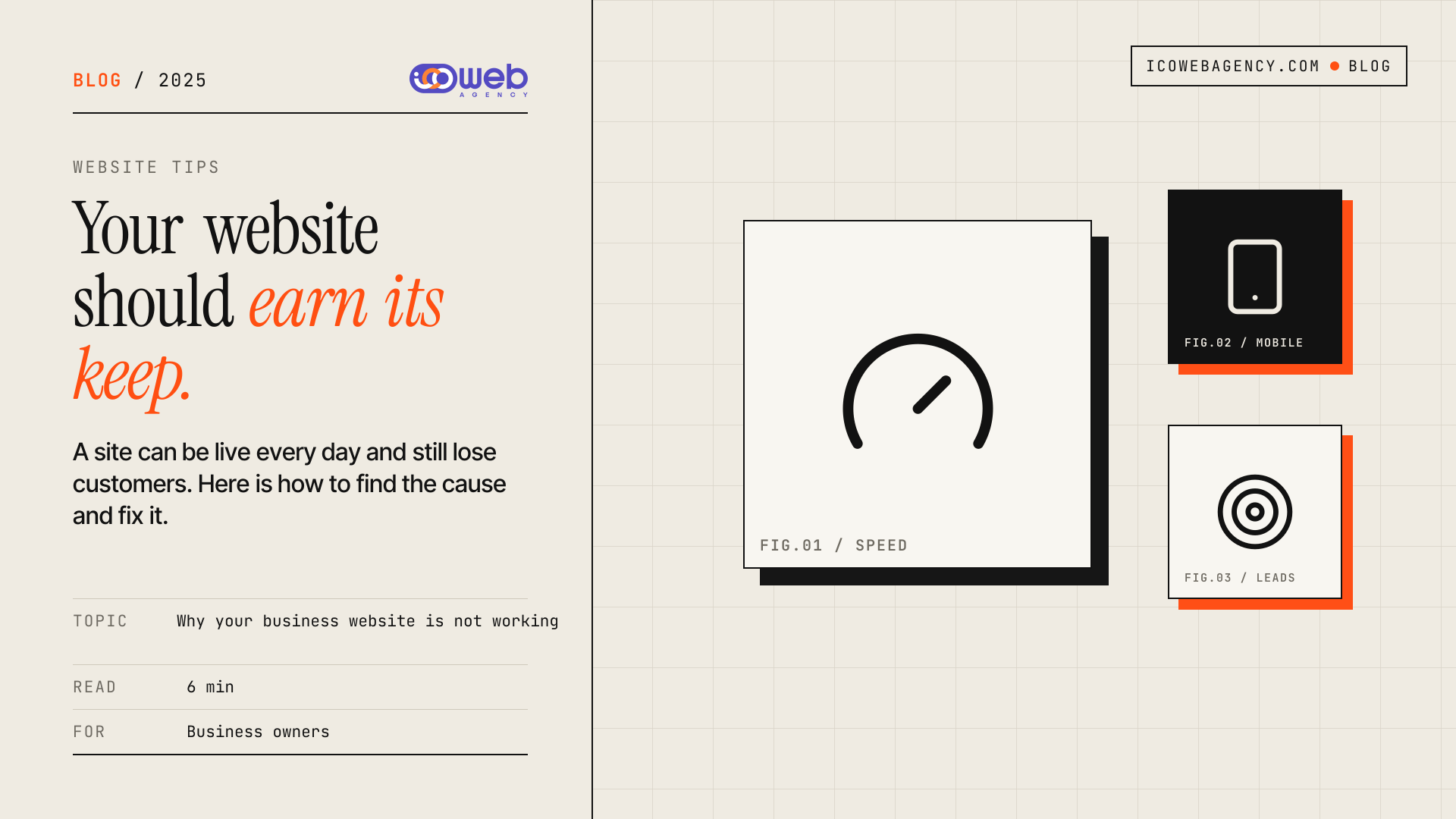
Is your business website working, or is it simply online? A site can be live every day and still fail to bring in enquiries. When your business website is not working, the cause is usually one of a few fixable problems: pages that load slowly, a layout that struggles on phones, unclear messages, or no obvious next step for visitors. This guide explains how to spot each one and what to do about it.
Why a business website should be an asset
Your website is one of the few sales tools that never takes a day off. It works without breaks, but it also needs a clear purpose and a good design to do its job well. Judging whether it is an asset comes down to three things.
It attracts customers through search
A well-structured site can reach people who are already searching for what you sell. Clear page titles, descriptive headings, fast pages and useful content help search engines understand what each page offers. This is search engine optimisation, or SEO, and it works best when your site answers the questions your customers actually ask.
It gives visitors a smooth experience
Speed and usability decide whether visitors stay. Google has reported that 53% of mobile visits are abandoned when a page takes longer than three seconds to load, according to its mobile page speed research published in 2016. Most people will not wait for a slow page, and they rarely give a confusing one a second chance.
It turns visitors into customers
Strategic calls to action, a clear statement of what you offer and simple contact or checkout forms turn browsers into buyers. A visitor should understand within seconds what you do, who it is for and what to do next.
Signs your business website is not working
Some symptoms are easy to spot. Check whether your site shows any of these:
- Pages that feel slow to load, especially on mobile data
- A layout that is hard to read or use on a phone
- A design that looks dated and makes the business seem less trustworthy
- Menus or pages that leave visitors unsure where to go next
- Few or no enquiries, quote requests or sales coming from the site
- Many visitors who leave after one page, with very few taking any action
Any one of these can cost you customers. When several appear together, the site usually needs a structured review rather than a quick cosmetic change.
Six fixes that make your website work harder
1. Improve website speed
Compress images, remove plugins or scripts you do not use, choose hosting that suits your traffic, and enable browser caching so repeat visits load faster. Test your most important pages with a speed tool and fix the biggest problems first.
2. Make it mobile-friendly
Responsive design, where the layout adapts to the screen size, is now the baseline expectation. Design for the phone first, then test on real devices rather than relying only on your office computer.
3. Upgrade the design
Modern layouts, good photography and consistent colours, fonts and logo use build trust quickly. Visitors judge credibility in seconds, so a tidy, current design matters more than decorative effects.
4. Simplify navigation
Keep menus short, place your most important pages within one or two clicks, and use plain labels such as Services and Contact rather than clever names. If your site holds many pages or products, add a search box so people can find what they need.
5. Optimise for search
Research the words your customers type, write pages that answer their questions, publish useful content on a regular schedule and earn links from reputable sites in your field. Give every page its own title and meta description that matches what the page offers.
6. Include strong calls to action
Every page should make the next step obvious: request a quote, book a call, phone the office or buy now. Use action-led button text, place the main action where it is visible without scrolling and keep forms short. Ask only for the information you genuinely need.
How to check whether your website is working
Changing things without measuring them leads to guesswork. Set a few goals, such as enquiries per month, quote requests or completed purchases, and track them with an analytics tool. Watch where visitors come from, which pages they view, how long they stay on key pages and where they drop off in forms or checkout. Review the numbers monthly and change one thing at a time so you can see what made a difference.
Frequently asked questions
How do I know if my business website is not working?
Look at what the site is meant to do. If it is not bringing in enquiries, sales or bookings, or if visitors leave quickly and rarely take action, it is underperforming. Analytics and a simple review of speed, mobile use and calls to action will show the likely cause.
What is the most common reason a business website fails to generate leads?
The most common issue is an unclear offer combined with no obvious next step. Visitors who cannot see what you do or how to contact you tend to leave. Clear headlines, a visible call to action and a short contact form solve this in most cases.
Does website speed really affect business results?
Yes. Slow pages make visitors leave before they see your content, and search engines take page experience into account. Faster pages keep more people engaged, which gives your offer a fair chance.
Should I fix my website or rebuild it?
It depends on the problems. If the structure, code and content are sound, targeted fixes to speed, mobile layout and calls to action are often enough. If the site is hard to update, does not work well on phones or cannot grow with your business, a rebuild may be the better investment. Cost depends on scope, features, content and integrations, and you can read more about what we build on our services page.
If you suspect your website is costing you customers, Icoweb can help. We build websites with Next.js and mobile apps with Flutter, and we can review your current site before recommending changes. Share your goals through our project brief or reach out directly on our contact page.